
Artist and Practice
Biography
G. Gelbmann’s Path:
He received his artistic training at what is today the University of Arts and Industrial Design in Linz.
Teachers: Georg Eisler/Vienna, Hubert Schmalix/Vienna, Helmuth Gsöllpointner, Erwin Reiter.
From the beginning of his “DANCE PATH” to the present day, the works document a deep, interdisciplinary commitment that combines visual art, dance and music in a remarkable way.
The Work in General, the Influence of Dance/Ballet
The works are often inspired by fleeting moments of contemporary ballet, especially during the creation of a stage language that manages without words. For generations, this art form has had a firm place in our society and fascinates with its many layers.
Gelbmann had the opportunity to experience with renowned companies how choreographies come into being from the first step to the premiere. Particular emphasis is placed on involving the protagonists, which refines the choreographic approaches. This modern cultural technique is characterized by strength and dynamism in constantly changing sequences of movement.
His goal is to capture the effective fractions of a second in the works, whether on 2D picture supports or in 3D realizations. Every beginning requires adequate solutions to capture the essence of these moments.
Inspirations from dance flow into the various forms of work.
Like a red thread, his philosophy runs through the works and all forms of working, making both the before and the after of an action tangible.
The work is characterized by original, formal solutions, experimentation and constant further development.
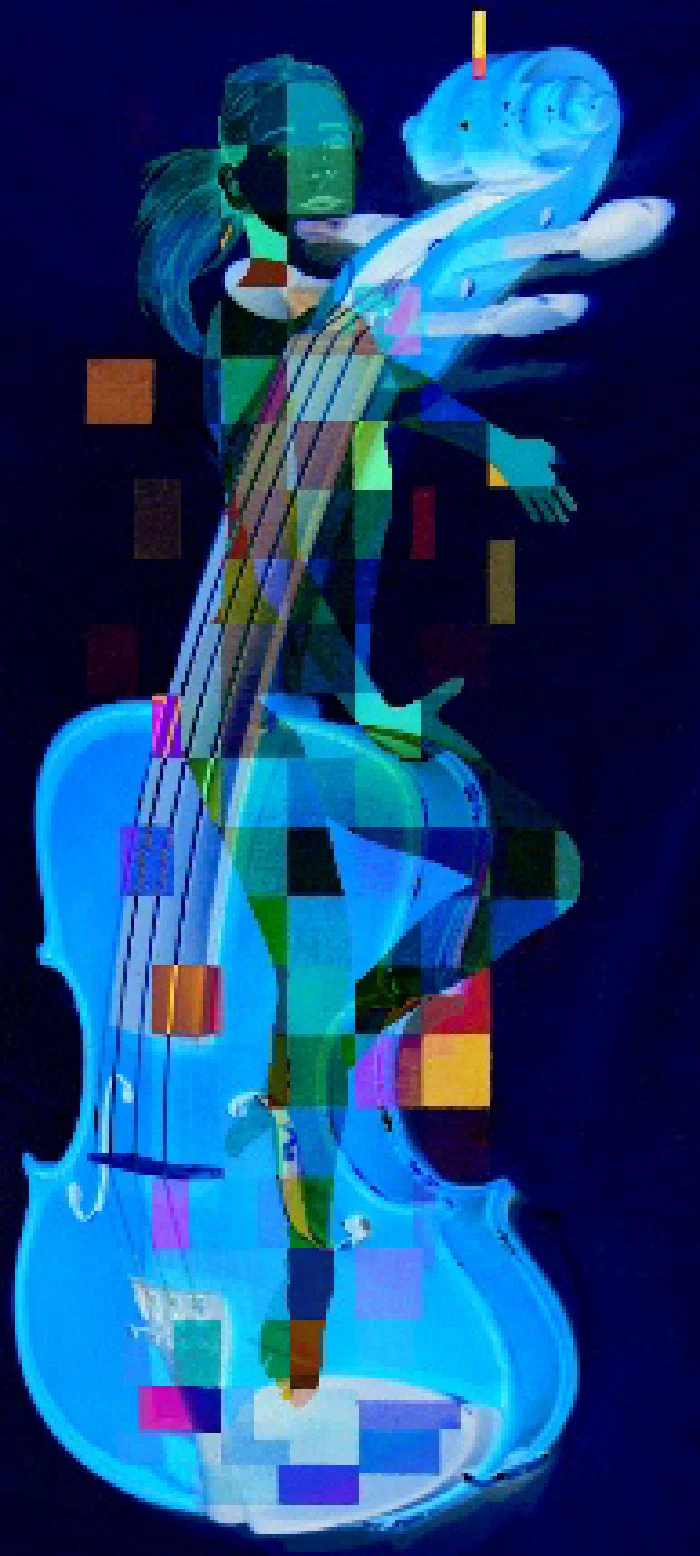
Music, too, which plays an important role in performances, often appears in the form of quotations.
Finished works become a Dance of Sensations.
Alongside practical experience, Gelbmann was also able to acquire extensive knowledge of dance history and theory.
Recipients are invited to break away from the hustle and bustle of everyday life and immerse themselves in the fascinating world of dance.
Why Do Modern Dance Processes Fascinate?
Ballet / dance are indispensable in our society!
An inspiring art form that plays a supporting role in the art of theater, on stage in general and in film.
What arises in dance as activity in time and space leads, in the visual arts, to a metaphorical unfolding.
DANCE/BALLET in transition, to the present day
Baudelaire already devoted himself to new developments in contemporary ballet in his article “The Painter of Modern Life.” Artists were meant to break away from their outdated models, as later also inspired by the “Secession.” Baudelaire writes:
The peculiarity of dance as an art form reveals itself in the process of transforming the moving body into signs and sign patterns. Movements are placed into space as rhythmic signs, in a temporal order that has yet to be created. The moment is grasped as a pure, visible process of transformation, as metamorphosis.
Numerous painters in the modern era used dance as an artistic influence and source of inspiration. Worth mentioning here are Édouard Manet, Edgar Degas, Henri de Toulouse-Lautrec or Auguste Rodin. Later, examples include Alexander Archipenko, Sonia Delaunay, Erich Heckel, Alexej, Jawlensky, Wassily Kandinsky, Ludwig Kirchner, Paul Klee, August Macke, Franz Marc, Henri Matisse, Emil Nolde, Max Pechstein, Oskar Schlemmer and others.
While a dance project is coming into being, several aspects come together and contribute to its complexity. Essential roles are played by physical condition, the dispositions of the artists, their training and experience. Further constant influences are the means of stage language through choreography, dramaturgy, music, stage design, as well as costumes and lighting. Beyond that, choreographers and techniques continue to develop.
Merce Cunningham approaches this complexity in his choreographies “Changing Steps” (1965) and “How to Pass, Kick, Fall and Run” (1975). Cunningham writes:
In contemporary ballet, the dancers’ dispositions become a discovery. In performance, they are largely transparent. The fleeting signs of dance are translated by the body, as a medium, into a sculptural, colorful rhythm. The bodies of the dancers are part of the performance, yet vanish, as it were, in the process of movement. Every utterance is understood as movement, for even our heartbeat, our breath, our thoughts are movement. Halting movement, stillness and the intangible moment of the beginning of dance become the theme.
Another influential choreographer is Pina Bausch, born in 1940:
She develops a form that did not exist at the time. Experienced fragments of everyday realities were realized in TANZTHEATER (dance theater).
Not how people move, but what moves them becomes the dramaturgy of sensations. A symbolic theater became a poetic, metaphorical one.
Innovators also include Jiri Kylian of the “Netherlands Dans Theater,” William Forsythe, Ballett Frankfurt (1984–2004), Maurice Béjart, John Neumeier and many others – in no particular order and without any claim to completeness.
Developments in dance continue without pause. The diversity is present on numerous stages. At dance festivals, similar to the Impulstanz Festival in Vienna, outstanding performers appear.