
SCULPTURE
A DESCRIPTION OF THE WORK first
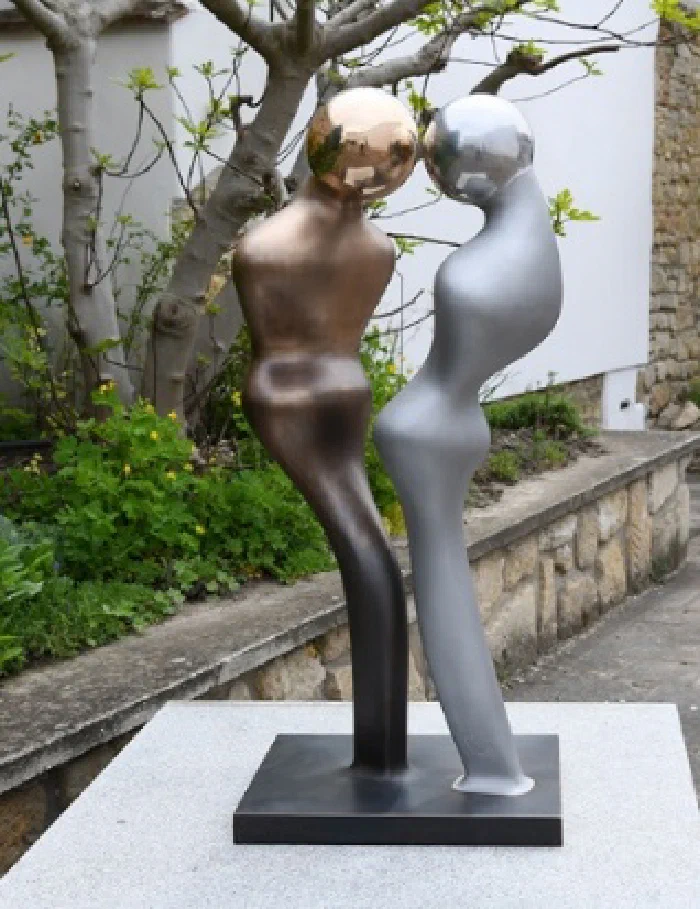
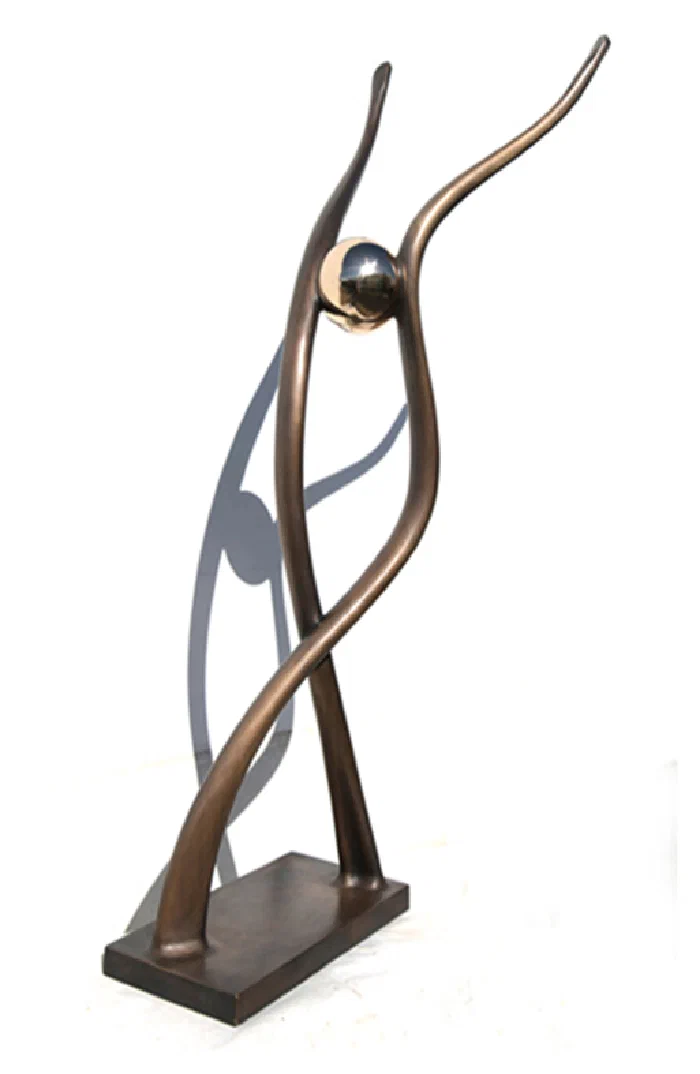
Two body-like sculptures can be seen. The use of different materials is striking.
The pair appears flexible and mobile; the composition leaves the interpretation of the action open.
One can assume that dynamism and transience have been brought into focus thematically.
The congruence of the work with dance can be found on every level. The line work is highly dynamic. Flowing forms and reflective surfaces reinforce the dynamic flow of movement, which can be recognized above all in the play of light on the polished heads.
A light reflection is flexible and changeable. Depending on the viewer’s perspective and the incidence of light, it varies and can create a new effect. The work makes use of this property of light and thus seems to want to elude reproducibility, much as dancers do by nature. The bodies could thus be understood as a symbiosis between music and movement.
These parameters are, by nature, determined by transience.
The theme of transience is found not only in the play of light, but also, very clearly, in the missing limbs and the soft, rounded contours. Likewise, the flowing lines of the work suggest the directions of movement of the arms and legs.
Just as the human body brings itself forth anew with every movement, the sculpture is brought to life by its reflective surface.
The body merges with its surroundings, just as the bodies of dancers perform with the music and the space.
In summary, it can be said that dance, movement and dynamism are expressed through a supple material surface and through sweeping, interflowing contour lines. The resulting light reflections, as well as the focus on the center of the body, contribute as well.
Linda Fress, BA
Works from several stages of development
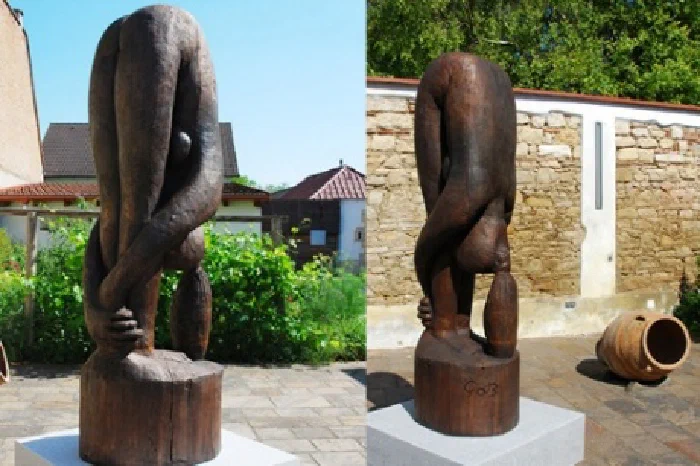
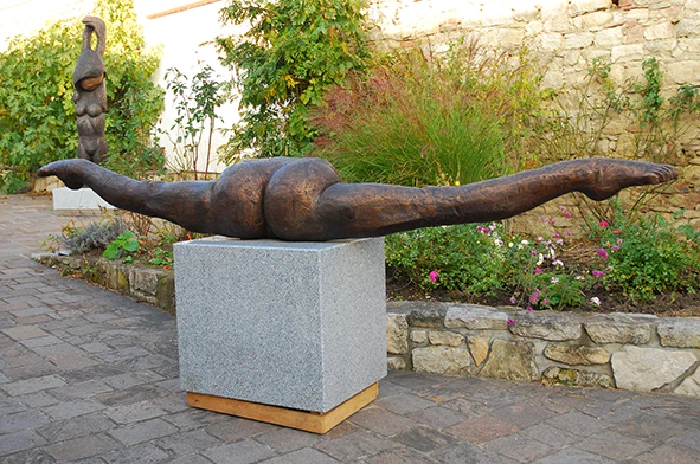
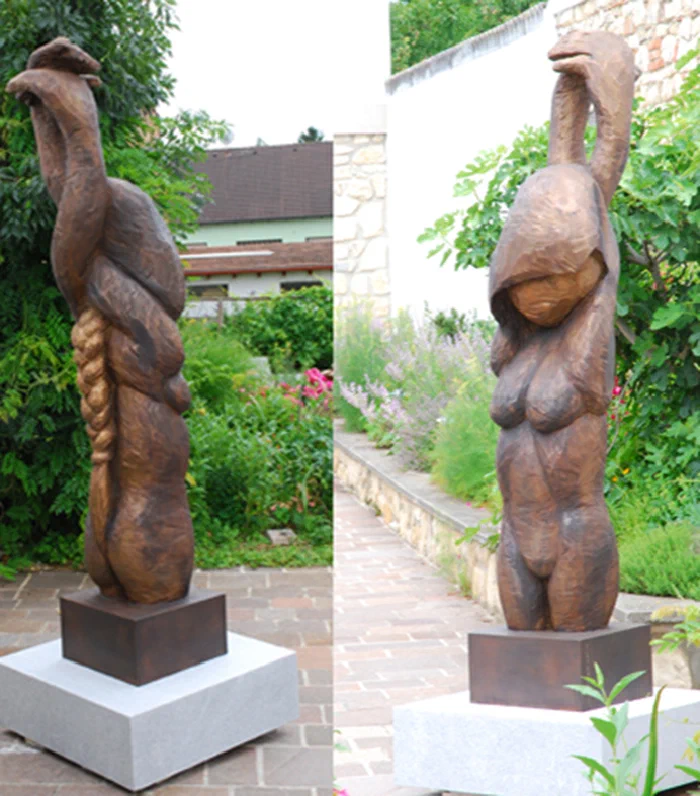
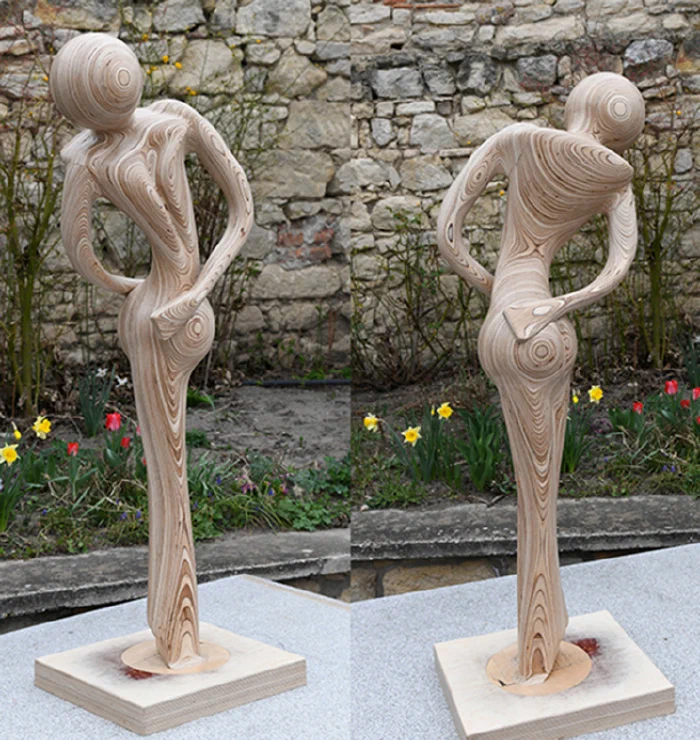
Before being cast in bronze, the models are made from a wide variety of materials (e.g. wood, stone, plaster, metal).